Radiant Heated Bathroom Floors: A Smart Upgrade for Massachusetts Homes
Radiant Heated Bathroom Floors: A Smart Upgrade for Massachusetts Homes
Stepping onto a cold tile floor on a Massachusetts morning is not exactly the most comfortable way to start the day.
Tile is one of the most practical materials for bathrooms because it is durable, attractive, and well suited to areas exposed to moisture. But during the colder months, tile can feel noticeably cold underfoot.
That’s one reason radiant heated bathroom floors have become an appealing upgrade for homeowners planning a bathroom remodel.
Installed beneath the finished flooring, these systems can provide comfortable, even warmth across the floor without changing the visual design of the bathroom.
For homeowners throughout Middlesex County, Worcester County, Norfolk County, and the Greater Boston Area, the best time to consider radiant floor heating is usually during the remodeling process—before the new tile is installed.
What Is Radiant Bathroom Floor Heating?
Radiant floor heating warms the floor surface from underneath rather than relying solely on heated air entering the room.
Depending on the project, electric heating elements can be incorporated into an appropriate under-tile installation system.
Once completed, homeowners see only the finished tile.
The heating components disappear beneath it.
That makes radiant heating an interesting remodeling upgrade because it adds functionality without adding visible equipment to the room.
Why It Makes Sense in Massachusetts
Massachusetts homeowners experience significant temperature changes throughout the year.
Fall quickly gives way to colder conditions, and bathrooms are one of the rooms where cold flooring can be particularly noticeable.
Radiant heating provides warmth directly where homeowners feel it.
Instead of walking onto cold tile after getting out of the shower, the floor itself can provide a more comfortable surface.
Comfort Without Changing the Bathroom Design
One of the advantages is that the heating system does not need to dominate the room visually.
You can still choose the tile, vanity, fixtures, shower, glass, colors, and other finishes according to the desired design.
The heating system remains underneath.
The Best Time to Install Heated Flooring
The ideal time to discuss heated bathroom flooring is before the new floor is installed.
Adding it during a full bathroom renovation makes sense because the existing flooring is already being removed and the substrate is accessible.
Trying to add an under-tile heating system after a recently completed floor has been installed would typically involve disturbing finished materials.
Planning ahead is therefore important.
What Goes Under the Tile?
The finished bathroom may look simple:
Tile → Grout → Beautiful Floor
But the construction underneath can involve multiple components.
Depending on the selected system and project, the assembly may include:
- Prepared substrate
- Heating system
- Appropriate installation materials
- Temperature sensor
- Tile-setting materials
- Finished tile
Each component needs to work with the others.
This is why floor heating should be considered part of the bathroom construction plan rather than a last-minute accessory.
Why Surface Preparation Matters
Before any finished flooring is installed, the underlying surface needs to be evaluated.
Contractors may need to consider:
- Flatness
- Stability
- Existing damage
- Subfloor condition
- Transitions
- Finished floor height
A heating system does not correct problems in the structure beneath it.
Good finished work begins with good preparation.
Heated Floors and Bathroom Tile
Tile works particularly well with radiant heating because it can transfer heat from the system below to the walking surface.
Popular bathroom finishes may include:
- Porcelain tile
- Ceramic tile
- Certain natural stone products
However, material selection should always be coordinated with the specific heating and installation systems being used.
Radiant Floor Heating vs. Traditional Bathroom Heating
| Feature | Radiant Heated Floor | Conventional Room Heating |
|---|---|---|
| Heat location | Beneath flooring | Typically heats room air |
| Floor comfort | Directly warms floor | Floor may remain cool |
| Visible equipment | Hidden | Varies by system |
| Best installation time | During renovation | Depends on system |
| Works with tile design | Yes | Independent of tile |
| Adds floor-level comfort | Excellent | Indirect |
Radiant flooring does not necessarily replace the home’s primary heating system.
Its purpose and design depend on the specific project.
Don’t Forget the Thermostat
Homeowners sometimes focus on the heating system beneath the floor and forget about how it will be controlled.
The project needs to account for:
- Thermostat location
- Electrical requirements
- Floor sensor
- Desired schedule
- System compatibility
These decisions should be coordinated before walls and floors are finished.
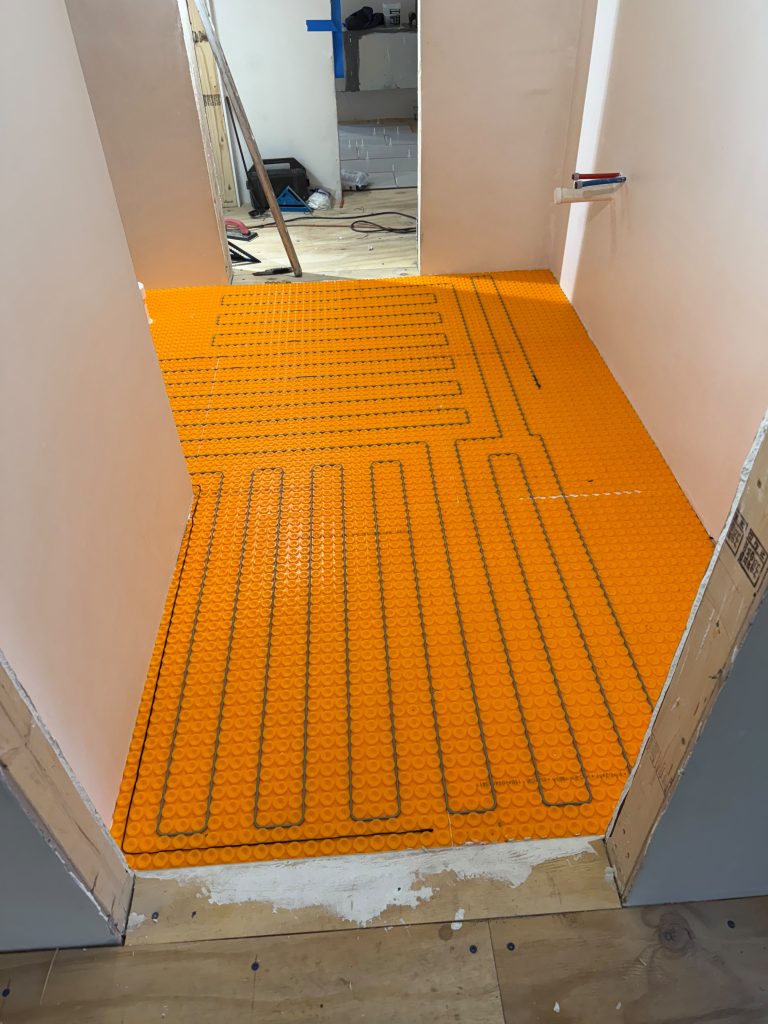
Why the Installation Photo Matters
This is one of those construction features that becomes completely invisible after the remodel.
Once the tile is installed, someone looking at the finished bathroom would never know exactly what was installed underneath.
That’s why the Ronie Construction photograph accompanying this article is valuable.
It shows a real bathroom renovation with the floor-heating installation visible before the finished tile covers it.
Instead of simply telling homeowners that quality work exists behind the finished surface, we can actually show it.
Heated Floors as Part of a Complete Bathroom Remodel
Floor heating should not be planned independently from the rest of the bathroom.
It needs to coordinate with:
- Floor tile
- Shower location
- Vanity
- Toilet
- Floor transitions
- Electrical work
- Finished floor height
- Other construction
A professional remodel looks at these elements together.
Is Radiant Floor Heating Worth Considering?
That depends on the homeowner’s priorities.
It can be particularly attractive when:
- The bathroom already needs new flooring
- Tile is being installed
- Comfort during colder months is important
- The homeowner plans to stay in the property
- The bathroom is being substantially renovated
The key is considering it before the flooring work is completed.
Why Fall Is a Good Time to Think About It
September and fall are natural times for Massachusetts homeowners to start thinking about colder mornings ahead.
If a bathroom renovation is already being planned for fall or winter, this is the right stage to discuss whether radiant flooring belongs in the project.
The decision can then be incorporated into electrical planning, flooring preparation, material selection, and construction sequencing.
Real Ronie Construction Work
The image featured in this article comes from an actual Ronie Construction project.
It documents the type of work homeowners rarely see once a bathroom is complete.
Ronie Construction provides bathroom remodeling and broader residential construction services throughout Middlesex County, Worcester County, Norfolk County, and the Greater Boston Area.
Showing real construction stages allows homeowners to evaluate not only the finished appearance but also the workmanship behind it.
Planning for Long-Term Use
Bathroom remodeling is an opportunity to think beyond what looks good today.
Ask:
- How will this bathroom feel during winter?
- Is the floor comfortable?
- Is the layout functional?
- Is there enough storage?
- Is the shower appropriate for everyday use?
- Are we making upgrades now that would be difficult to add later?
Those questions often lead to better remodeling decisions.
Final Thoughts
Radiant heated flooring is a perfect example of a remodeling feature that homeowners feel rather than see.
After installation, the heating system disappears.
What remains is the tile floor and the additional comfort it can provide.
For Massachusetts homeowners already planning to replace a bathroom floor, discussing radiant heating before construction begins can help determine whether it makes sense to incorporate it into the project.
The important word is before.
Because once the beautiful new tile goes down, everything underneath it should already be exactly where it belongs.
FAQs
Can radiant heating be installed underneath bathroom tile?
Yes. Systems designed for compatible tile installations can be incorporated during bathroom floor construction.
When should heated flooring be installed during a bathroom remodel?
It should be planned before the finished floor is installed so electrical requirements, substrate preparation, heating components, sensors, and tile installation can be coordinated.
Does radiant floor heating replace my home’s heating system?
Not necessarily. The purpose and capacity of the system depend on its design and the project.
Can I add radiant heating without replacing my existing tile?
Because the heating system is installed beneath the finished flooring, adding it to an existing tiled bathroom typically requires access beneath the tile.
Is heated flooring useful in Massachusetts?
It can provide additional floor-level comfort during Massachusetts’ colder months, particularly in bathrooms with tile flooring.
Can Ronie Construction install it as part of a bathroom remodel?
Radiant flooring can be considered as part of the overall bathroom renovation scope, with the required construction and trade work coordinated for the project.
Make Your Next Bathroom More Comfortable From the Floor Up.
Planning a bathroom remodel in Massachusetts?
👉 Ask Ronie Construction about incorporating radiant heated flooring into your renovation before the new tile goes down.
.
📞 (781) 420-2049
🔗 https://ronieconstruction.com/contact/