Bathroom Remodeling Done Right Starts Behind the Walls
A bathroom renovation is one of the most effective ways to improve both the function and appearance of a home.
But a successful bathroom remodel is about much more than choosing attractive tile or installing a new shower door.
Behind a beautiful finished bathroom is careful planning, waterproofing, proper tile installation, precise layout, plumbing coordination, and attention to every detail.
For homeowners in Middlesex County, Worcester County, Norfolk County, and the Greater Boston Area, professional bathroom remodeling can transform an outdated or inefficient space into a comfortable, modern, and highly functional part of the home.
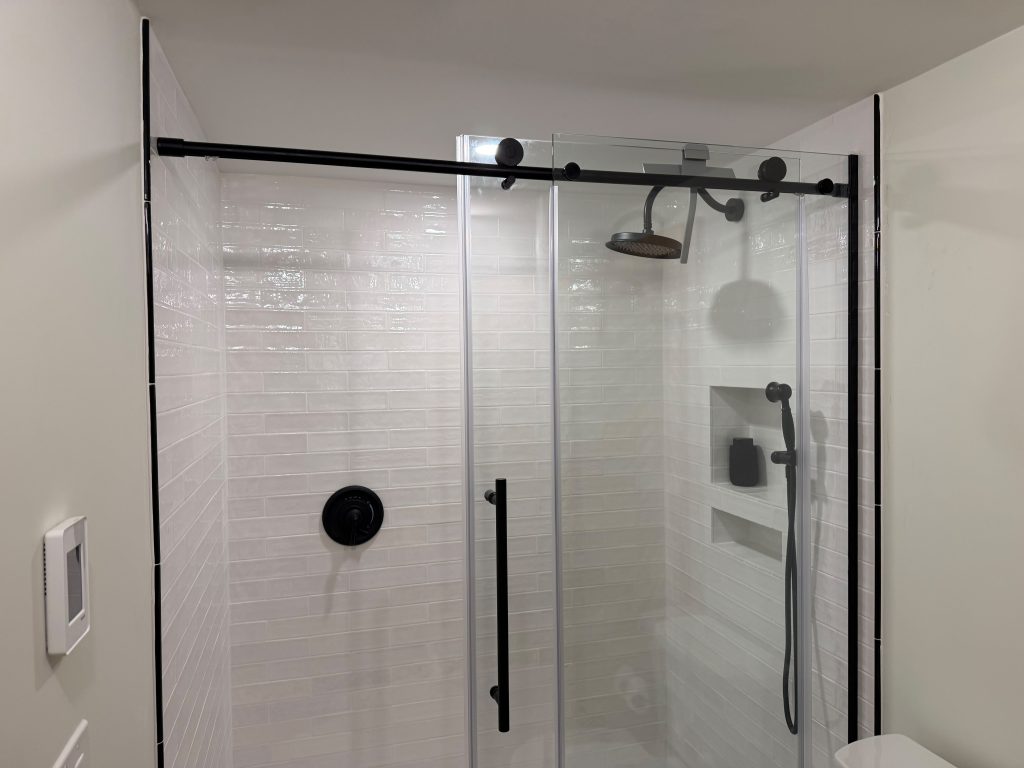
The bathroom renovation shown in the accompanying project photos demonstrates several of these principles, including a custom tiled shower, recessed niche, large-format wall tile, detailed floor tile installation, and a frameless-style glass enclosure.
Why Bathroom Remodeling Requires More Than Good Design
A bathroom is exposed to moisture every day.
That makes construction quality especially important.
A beautiful bathroom can still develop serious problems if water is allowed to penetrate behind tile or around plumbing penetrations.
Professional bathroom remodeling should consider:
- Waterproofing
- Shower drainage
- Wall preparation
- Tile layout
- Floor preparation
- Plumbing
- Shower fixtures
- Ventilation
- Glass enclosure installation
- Grout and sealant
- Finishing details
The finished appearance is important, but what happens behind the tile is just as important.
Waterproofing Is the Foundation of a Successful Shower
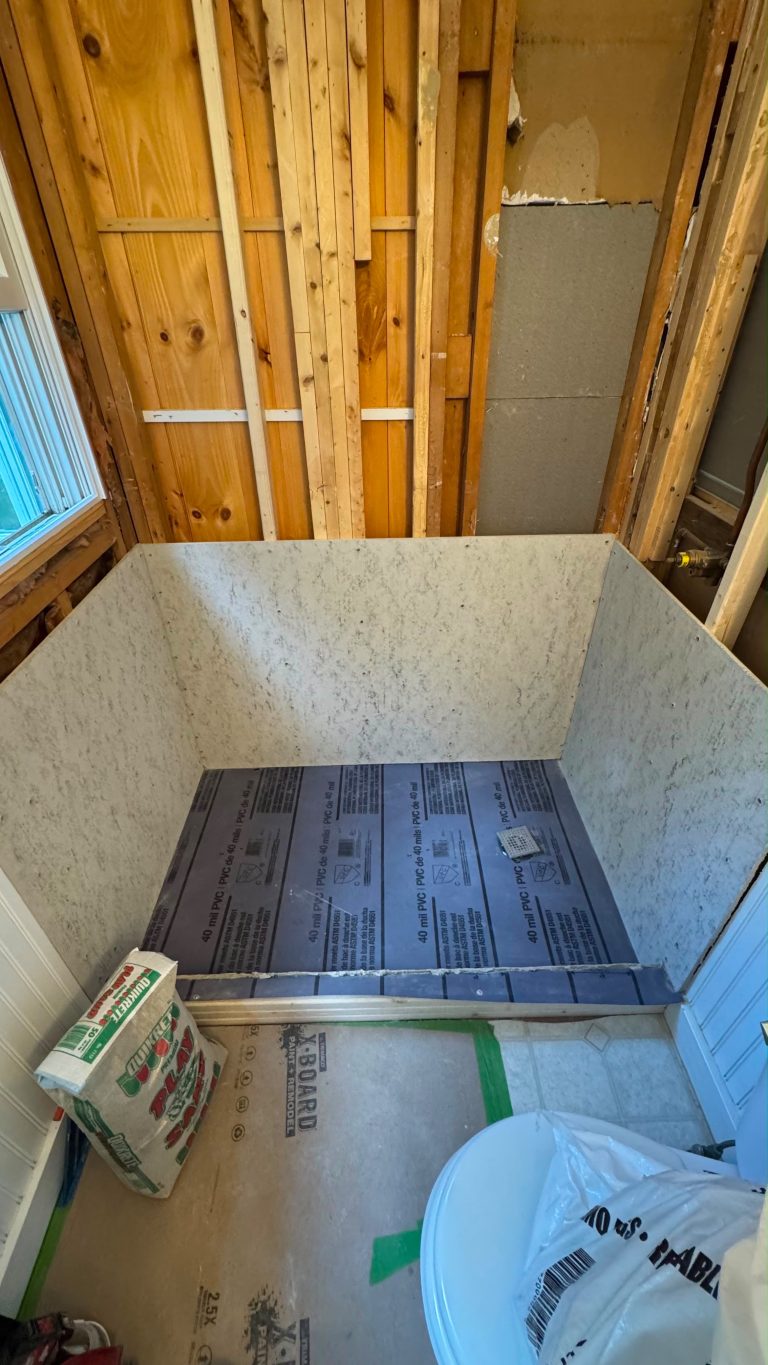
One of the most important stages of a shower renovation happens before the final tile is installed.
The shower area needs an appropriate waterproofing system designed for the application.
In the project shown in the photos, the shower walls and floor were carefully prepared before the final tile installation.
Why Shower Waterproofing Matters
A shower is constantly exposed to water.
Without proper moisture management, water can potentially reach:
- Wall framing
- Subfloor
- Insulation
- Adjacent materials
- Other structural components
Over time, moisture intrusion can contribute to deterioration, mold-related problems, or costly repairs.
That is why waterproofing should never be treated as an optional upgrade.
Large-Format Tile Creates a Modern Look
The bathroom featured in the project uses large-format tile throughout the shower and surrounding areas.
Large-format tile can create a clean, contemporary appearance because there are fewer grout lines across a given surface.
It can work particularly well in bathrooms where homeowners want:
- A modern aesthetic
- A more seamless appearance
- Neutral colors
- Easy visual continuity
- A sophisticated spa-like atmosphere
However, larger tiles also require careful preparation and installation.
Shower Niches Combine Design and Function
The recessed shower niche in this project is a good example of combining functionality with visual design.
Instead of relying on freestanding shelves or shower caddies, a built-in niche provides dedicated storage within the shower wall.
Why Homeowners Choose Shower Niches
A properly designed niche can provide space for:
- Shampoo
- Conditioner
- Body wash
- Soap
- Other shower products
It also keeps products organized while maintaining a cleaner overall appearance.
The niche should be carefully planned around the tile layout so that it looks intentional rather than added as an afterthought.
Floor Tile Requires Careful Planning
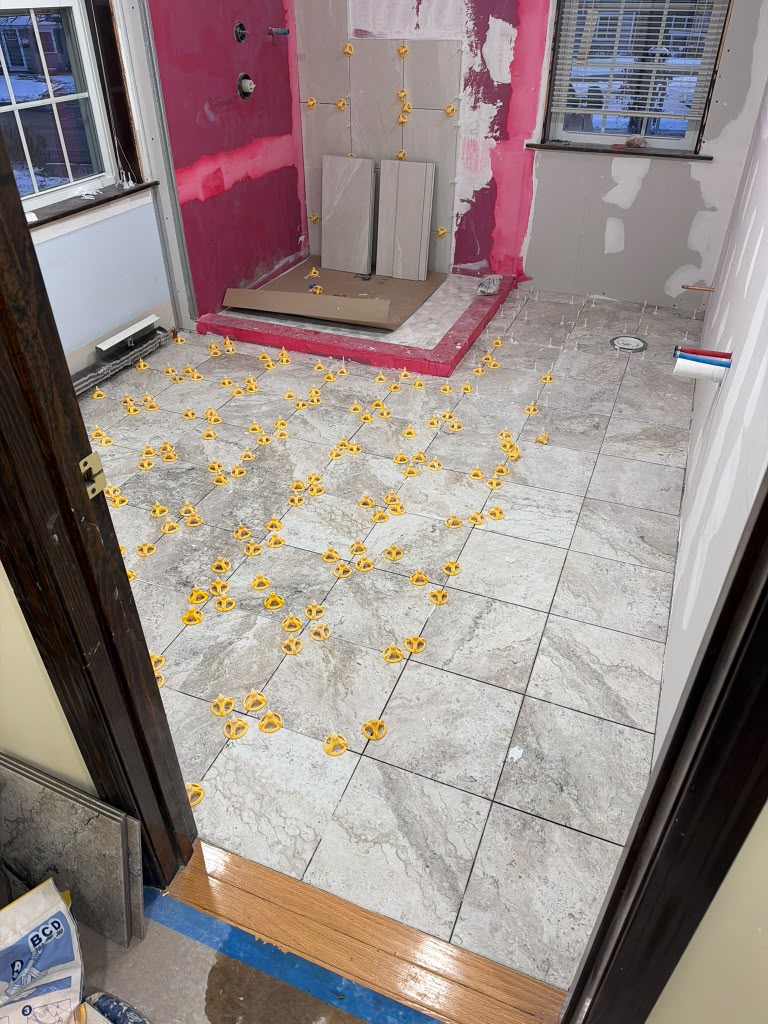
The bathroom floor shown in the project features a patterned tile arrangement with multiple tile spacers and leveling clips visible during installation.
This illustrates an important part of professional tile work: precision during installation.
Tile installation requires attention to:
- Substrate preparation
- Layout
- Spacing
- Leveling
- Alignment
- Cuts
- Transitions
- Drain positioning
- Grout joints
Even premium tile can look poor if the installation lacks precision.
Shower Floor and Drainage
The shower floor requires special attention because water must move efficiently toward the drain.
The slope and drainage system need to be coordinated with the shower design.
A properly planned shower floor helps prevent standing water and contributes to the long-term performance of the bathroom.
This is one reason bathroom remodeling should be approached as a complete construction system rather than simply a cosmetic upgrade.
Glass Shower Enclosures Complete the Design
The finished project features a clear glass shower enclosure that allows the tile work to remain visible.
Glass can make a bathroom feel:
- Larger
- Brighter
- More open
- Cleaner
- More contemporary
It also allows decorative tile, niches, fixtures, and shower details to become part of the overall visual design.
Choosing the Right Bathroom Tile
There are many tile options available for bathroom remodeling.
Homeowners can consider:
| Tile Option | Design Character | Common Application |
|---|---|---|
| Large-format porcelain | Modern and seamless | Walls and floors |
| Ceramic tile | Versatile | Walls |
| Mosaic tile | Detailed and decorative | Shower floors and accents |
| Natural stone | Premium and organic | Walls and floors |
| Textured tile | Visual interest | Accent walls |
The right choice depends on the home’s style, maintenance expectations, budget, and the specific location where the material will be installed.
Bathroom Remodeling Is About Function, Too
A bathroom should look good, but it should also work well every day.
A remodeling project can improve:
- Shower accessibility
- Storage
- Lighting
- Fixture placement
- Floor layout
- Vanity configuration
- Ventilation
- Overall usability
A professional remodel starts by understanding how homeowners actually use the space.
When Should You Consider a Bathroom Renovation?
Homeowners may want to consider remodeling when they experience:
- Outdated finishes
- Damaged tile
- Recurring moisture problems
- Poor shower layout
- Insufficient storage
- Aging plumbing fixtures
- Poor lighting
- Difficult-to-clean surfaces
- Inefficient use of space
A renovation can address several of these problems at the same time.
Bathroom Remodeling in Older Massachusetts Homes
Many homes throughout the Greater Boston Area and surrounding counties are older properties.
During a renovation, contractors may discover conditions that were not visible before demolition.
These can include:
- Older plumbing
- Damaged subfloor
- Previous water damage
- Outdated electrical components
- Improper previous renovations
- Deteriorated framing
This is one reason homeowners should choose a contractor capable of handling more than surface-level cosmetic work.
Why Professional Installation Matters
Bathroom remodeling combines several construction disciplines.
A successful project may involve demolition, framing, waterproofing, tile installation, plumbing, electrical work, finish carpentry, painting, and glass installation.
Ronie Construction provides residential remodeling and construction services throughout Middlesex County, Worcester County, Norfolk County, and the Greater Boston Area.
Its broader construction experience allows bathroom renovations to be approached as complete projects, rather than simply tile or fixture installations.
Final Thoughts
A high-quality bathroom remodel begins long before the final tile is installed.
Proper planning, waterproofing, substrate preparation, tile layout, drainage, and professional finishing all contribute to the finished result.
The bathroom project featured in these images demonstrates how thoughtful tile selection and professional installation can transform an ordinary bathroom into a modern, functional space.
If your bathroom needs more than a cosmetic update, a complete remodeling plan may be the right solution.
FAQs
How much does bathroom remodeling cost in Massachusetts?
Bathroom remodeling costs vary depending on the size of the space, materials, plumbing changes, tile selection, fixtures, labor, demolition, and project complexity. A detailed project assessment is the best way to establish an accurate budget.
Is waterproofing necessary for a tiled shower?
A properly designed waterproofing system is an important part of protecting the shower assembly from moisture intrusion.
Are large-format tiles good for bathrooms?
Yes. Large-format tiles can create a clean, modern appearance with fewer grout lines, but they require careful substrate preparation and professional installation.
What is a shower niche?
A shower niche is a recessed storage area built into a shower wall. It provides a convenient location for shower products without requiring external shelving.
Should I remodel the entire bathroom or just the shower?
It depends on the bathroom’s condition and your goals. If other elements are outdated or damaged, remodeling the entire space may provide a more cohesive result.
How long does a bathroom remodel take?
The timeline varies based on the scope of work, material availability, demolition discoveries, plumbing or electrical modifications, tile installation, inspections, and finishing work.
Ready to transform your bathroom into a beautiful, functional space?
📞 (781) 420-2049
🔗 https://ronieconstruction.com/contact/