
Roof Replacement Before Winter: What Massachusetts Homeowners Should Check This Fall
Roof Replacement Before Winter: What Massachusetts Homeowners Should Check This Fall
Fall in Massachusetts brings cooler temperatures, changing leaves, and an important reminder for homeowners:
Winter isn’t far away.
While homeowners often focus on heating systems, gutters, windows, and other seasonal maintenance, the roof deserves just as much attention.
Your roof is the home’s primary defense against rain, wind, snow, ice, and changing temperatures. Problems that seem relatively minor during early fall can become much more disruptive once winter weather arrives.
That doesn’t mean every older roof needs to be replaced before the first snowfall.
It does mean that fall is a smart time to evaluate its condition.
For homeowners throughout Middlesex County, Worcester County, Norfolk County, and the Greater Boston Area, identifying roofing concerns early provides more time to determine whether maintenance, repair, or replacement is appropriate.
Why Fall Is an Important Time to Look at Your Roof
Winter can make existing roof problems more difficult to address.
Once snow, ice, and freezing conditions arrive, the roof experiences different stresses than it does during warmer months.
Fall provides an opportunity to look for visible signs of deterioration before those conditions become more severe.
A roof assessment can help identify concerns involving:
- Missing shingles
- Damaged shingles
- Flashing
- Roof penetrations
- Valleys
- Edges
- Previous repairs
- Visible deterioration
- Interior evidence of moisture
Not every issue means replacement is necessary.
The important step is understanding what condition the roof is actually in.
Start With the Shingles
Shingles form the visible outer surface of many residential roofing systems.
From the ground, homeowners may sometimes notice:
- Missing shingles
- Lifted sections
- Damaged areas
- Uneven surfaces
- Visible deterioration
However, not every roofing condition is easy—or safe—to evaluate from below.
Homeowners should avoid climbing onto steep or potentially damaged roofs simply to perform their own inspection.
A professional assessment can provide a closer evaluation when needed.
Look for Evidence Inside the Home Too
Roof problems don’t always announce themselves from outside.
Sometimes the first evidence appears indoors.
Pay attention to:
- Ceiling stains
- Wall discoloration
- Moisture in attic areas
- Damp insulation
- Unusual odors
- Visible water intrusion
These symptoms don’t automatically identify the source.
Water can travel from the point where it enters before becoming visible inside the home.
That is why the source should be properly evaluated rather than assuming the stain directly identifies the roof problem.
Flashing Deserves Attention
Roofs aren’t simply large uninterrupted fields of shingles.
They contain transitions and penetrations.
Flashing may be used around areas such as:
- Chimneys
- Skylights
- Roof-to-wall intersections
- Vent penetrations
- Other transitions
These areas require careful integration because different building components meet there.
A roof can have shingles that appear relatively good while a vulnerable transition still needs attention.
Roof Valleys Handle Significant Water Flow
A valley is where two roof planes meet and direct water toward the lower edge of the roof.
Because water is concentrated in these areas, valleys deserve particular attention.
Homeowners should watch for visible:
- Debris accumulation
- Damaged roofing
- Deterioration
- Previous repairs
We’ll explore roof valleys more deeply in a later article because they deserve their own discussion.
What About Gutters?
Gutters are not the roof itself, but they are part of the home’s water-management strategy.
Fall leaves and debris can restrict drainage.
Depending on the property, homeowners should evaluate whether gutters and downspouts are:
- Secure
- Clear
- Properly directing water
- Free of obvious damage
Water should move away from the building rather than accumulate where it can create additional problems.
Repair or Replacement?
This is one of the biggest questions homeowners ask.
There isn’t a universal answer based only on roof age.
The decision may depend on:
- Overall roof condition
- Extent of damage
- Number of problem areas
- Previous repairs
- Roofing material
- Underlying conditions
- Long-term plans for the property
A localized problem may call for a targeted repair.
Widespread deterioration may make replacement more practical.
Why Repeated Repairs Matter
If the same roof continually requires repairs in different areas, homeowners should consider the bigger picture.
Repeatedly addressing isolated symptoms may not always be the most practical long-term approach when the entire roofing system is nearing the end of its useful service life.
Roof Repair vs. Roof Replacement
| Condition | Repair May Be Considered | Replacement May Be Considered |
|---|---|---|
| Small localized problem | ✓ | |
| Limited damaged area | ✓ | |
| One isolated flashing issue | ✓ | |
| Widespread deterioration | ✓ | |
| Numerous problem areas | ✓ | |
| Repeated repair history | Evaluate | Evaluate |
| Extensive aging | Evaluate | Evaluate |
| Underlying deck concerns | Depends on findings | May require broader work |
A professional evaluation is important because visible conditions do not always reveal what exists underneath.
What Happens Beneath the Shingles?
Homeowners naturally focus on the finished roofing material because that is what they see.
But a roofing assembly involves more than shingles.
Depending on the roof and project, components may include:
- Roof deck
- Underlayment
- Water-management components
- Flashing
- Roofing material
- Ventilation-related components
- Penetration details
During replacement, removing the existing roofing can reveal conditions that were not visible beforehand.
Why the Roof Deck Matters
The roof deck provides the surface supporting the roofing assembly.
If deterioration or damage is discovered after existing roofing is removed, that condition needs to be addressed appropriately before new roofing is installed.
This is another reason a roofing project should be evaluated as a system rather than simply:
“Remove old shingles and install new shingles.”
The finished surface is only one part of the work.
Fall Planning Doesn’t Mean Waiting Until the Last Minute
One mistake homeowners make is waiting until severe weather is imminent before addressing an obvious roofing concern.
If a roof is already showing signs of trouble, starting the evaluation earlier provides more time for:
- Inspection
- Scope development
- Material decisions
- Scheduling
- Repairs or replacement
The goal isn’t to create unnecessary urgency.
It’s to avoid unnecessary surprises.
Massachusetts Weather Makes Roof Condition Important
Homes throughout Greater Boston, Middlesex County, Worcester County, and Norfolk County experience changing seasonal conditions.
Roofs may be exposed throughout the year to:
- Rain
- Wind
- Snow
- Ice
- Sun
- Temperature changes
Regular evaluation helps homeowners understand how the roof is performing rather than waiting for obvious interior damage.
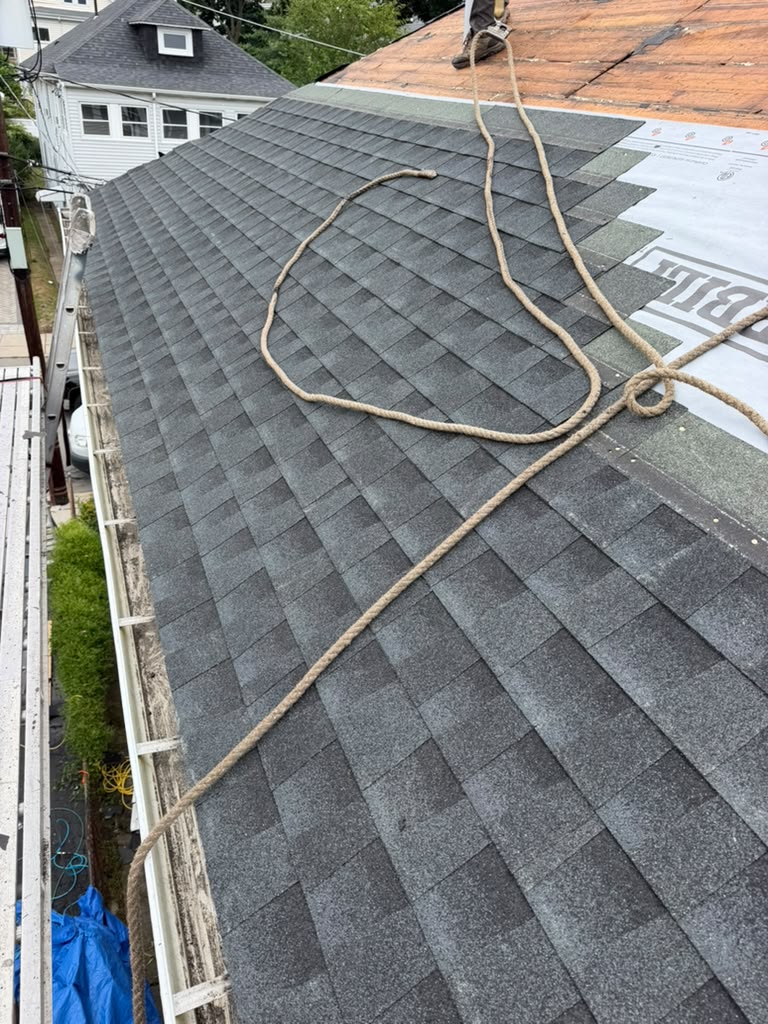
Real Ronie Construction Roofing Work
The photograph accompanying this article shows an actual roofing project performed by Ronie Construction.
Using real project photography is important because roofing quality involves more than a finished aerial photograph.
The process includes preparation, removal when necessary, evaluation of existing conditions, installation, transitions, and finishing details.
Ronie Construction provides roofing and residential construction services throughout its Massachusetts service area.
Questions to Ask Before a Roof Replacement
Before beginning a project, ask your contractor:
What is the current condition of the roof?
Understand why repair or replacement is being recommended.
What happens if damaged decking is discovered?
Clarify how unexpected conditions are handled.
What materials are included?
Understand the roofing system rather than focusing only on shingle color.
How will flashing and penetrations be handled?
These areas are important components of roof performance.
How will the property be protected?
Roofing work involves removal and installation of significant amounts of material.
Evaluate the Whole Roofing System
A professional roofing assessment should consider more than whether shingles “look old.”
The roof functions as a system involving materials, transitions, penetrations, drainage, and the structure underneath.
Ronie Construction works with homeowners throughout Middlesex County, Worcester County, Norfolk County, and Greater Boston, providing roofing and broader residential construction services.
That broader construction perspective is useful when roof work intersects with framing, exterior construction, or other building components.
Final Thoughts
Fall is not a deadline that automatically means your roof needs replacement.
It is an opportunity to ask an important question:
Is my roof ready for another Massachusetts winter?
If the answer is uncertain, now is a good time to evaluate it.
A minor issue may need only a repair.
A deteriorated roofing system may require a larger solution.
Either way, understanding the roof’s condition before winter is generally better than discovering the problem during a snowstorm.
FAQs
Is fall a good time to replace a roof in Massachusetts?
Fall can be a suitable period for roofing work depending on weather conditions, project scope, materials, and contractor scheduling.
How do I know whether my roof needs repair or replacement?
The decision depends on the extent of deterioration, location of damage, previous repairs, roof condition, and other project-specific factors.
Should I inspect my roof before winter?
Fall is a useful time to look for visible concerns and address known problems before harsher winter conditions arrive.
Does a roof leak always mean I need a new roof?
No. Some leaks can originate from localized problems. The source and overall roof condition should be evaluated before deciding on the appropriate solution.
What happens if damaged roof decking is found?
The condition should be evaluated and appropriate repairs made before the new roofing assembly is completed.
Does Ronie Construction provide roofing services in Greater Boston?
Ronie Construction provides roofing and construction services throughout Middlesex County, Worcester County, Norfolk County, and the Greater Boston Area.
Is Your Roof Ready for Another Massachusetts Winter?
Don’t wait for snow and ice to discover an existing roofing problem.
Contact Ronie Construction to discuss roof repair, replacement, or your next residential construction project.
📞 (781) 420-2049
🔗 https://ronieconstruction.com/contact/