Asphalt Shingles vs. Metal Roofing: Which Is Better for Massachusetts Homes?
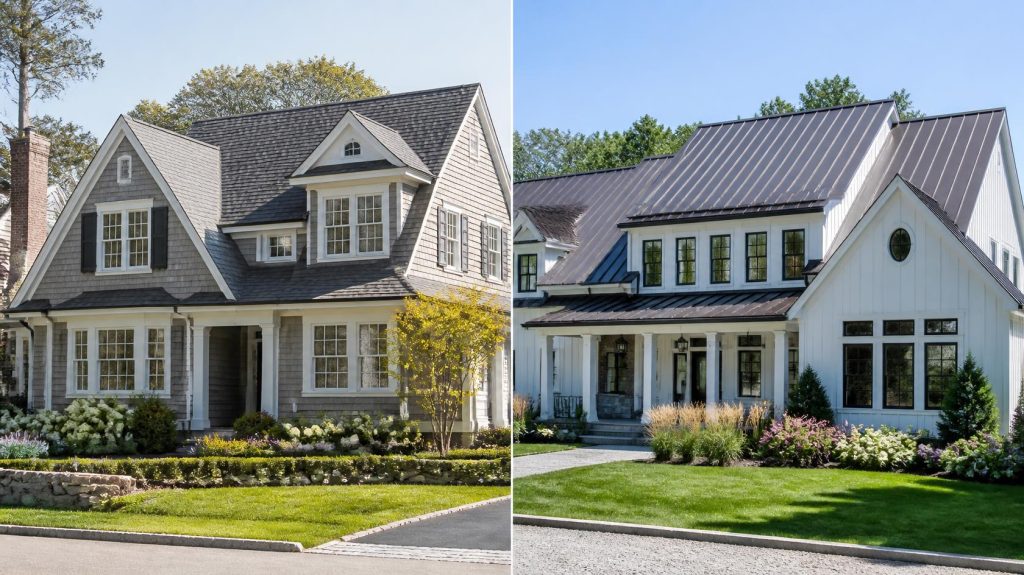
Your roof is one of the most important protective systems in your home.
It helps shield your property from rain, snow, wind, temperature changes, and other outdoor conditions. When a roof reaches the end of its useful life or begins experiencing recurring problems, homeowners often face an important question: should they replace it with traditional asphalt shingles or consider metal roofing?
For homeowners in Middlesex County, Worcester County, Norfolk County, and the Greater Boston Area, the answer depends on several factors, including the home’s architecture, budget, maintenance expectations, appearance, and long-term goals.
There is no single roofing material that is perfect for every Massachusetts home.
Why Roofing Material Matters
A roof is a long-term investment.
Choosing a roofing material involves more than selecting a color. Homeowners should consider:
- Durability
- Weather exposure
- Maintenance
- Installation requirements
- Appearance
- Expected service life
- Overall project budget
- Compatibility with the existing structure
A professional roofing evaluation can help determine which options are appropriate for a particular property.
Asphalt Shingles: A Popular Roofing Choice
Asphalt shingles are one of the most common residential roofing materials.
They are popular because they offer a broad range of styles, colors, and price points.
H3: Advantages of Asphalt Shingles
Potential advantages include:
- Familiar appearance
- Wide range of styles
- Broad availability
- Straightforward replacement options
- Compatibility with many residential architectural styles
Asphalt shingles can be a practical choice for homeowners who want a conventional appearance and a proven residential roofing solution.
Metal Roofing: A Different Approach
Metal roofing has become increasingly popular among homeowners looking for a durable, modern, or distinctive roofing solution.
Metal roofs can be available in different profiles, finishes, and colors, allowing them to complement both traditional and contemporary homes.
Potential Benefits of Metal Roofing
Depending on the product and installation, metal roofing may offer:
- Long-term durability
- Low-maintenance characteristics
- Resistance to many environmental conditions
- Modern design options
- A distinctive architectural appearance
However, metal roofing is not automatically the right choice for every property.
Asphalt Shingles vs. Metal Roofing
| Feature | Asphalt Shingles | Metal Roofing |
|---|---|---|
| Appearance | Traditional and versatile | Modern or architectural |
| Style options | Extensive | Extensive |
| Maintenance | Periodic inspection and maintenance | Generally low maintenance |
| Durability | Depends on product and conditions | Often designed for long-term performance |
| Installation | Common residential application | Requires appropriate expertise |
| Initial investment | Often more accessible | Can require higher upfront investment |
| Best for | Traditional residential styles | Long-term durability and distinctive design |
The actual performance and cost of either system depend on the specific product, installation, property conditions, and local requirements.
Massachusetts Weather Should Be Part of the Decision
Massachusetts homes experience significant seasonal changes.
A roof may need to withstand:
- Heavy rain
- Snow
- Ice
- Wind
- Summer heat
- Freeze-thaw cycles
- Seasonal moisture
Because of this, roofing material should be selected based on the property’s conditions rather than appearance alone.
Don’t Ignore the Roof Underneath
Replacing roofing material is not simply a matter of installing new shingles or panels.
Before installation, a professional should evaluate the roof system and identify potential problems such as:
- Damaged decking
- Moisture intrusion
- Flashing problems
- Ventilation concerns
- Deteriorated roofing components
- Previous repair work
If underlying issues are not addressed, installing a new exterior surface may not solve the actual problem.
Roof Ventilation Matters
A roofing system should be considered as a whole.
Ventilation can influence moisture management and the long-term performance of roofing components.
Homeowners should discuss ventilation, attic conditions, insulation, and moisture management with their contractor when planning a roof replacement.
Maintenance After Roof Replacement
Even a high-quality roof should not be ignored after installation.
Regular inspections can help homeowners identify:
- Damaged materials
- Missing components
- Flashing issues
- Moss or organic growth
- Water intrusion
- Gutter problems
Early attention may help prevent smaller issues from becoming larger repairs.
What About Cost?
Roofing costs vary substantially from property to property.
Factors can include:
- Roof size
- Roof pitch
- Material
- Labor
- Removal of existing roofing
- Decking repairs
- Flashing
- Ventilation
- Accessibility
- Structural conditions
- Project complexity
Instead of comparing materials based only on the initial price, homeowners should consider the complete project and the expected long-term maintenance requirements.
How to Choose the Right Roofing Material
A useful decision process is:
Step 1 — Evaluate the Existing Roof
Determine whether the roof requires repair or full replacement.
Step 2 — Understand Your Goals
Are you primarily looking for:
- Affordability?
- Traditional appearance?
- Long-term durability?
- Low maintenance?
- A modern aesthetic?
Step 3 — Evaluate the Property
Consider architecture, roof pitch, existing materials, ventilation, and surrounding conditions.
Step 4 — Compare Complete Proposals
Look beyond the material price.
Compare the scope of work, preparation, removal, installation, warranty information, and project details.
Why Professional Roofing Experience Matters
Roof replacement is a complex construction project that affects one of the home’s primary protective systems.
An experienced contractor can evaluate the existing roof, identify potential underlying issues, coordinate necessary repairs, and recommend materials based on the property’s specific needs.
Ronie Construction provides roofing and broader residential construction services for homeowners throughout Middlesex County, Worcester County, Norfolk County, and the Greater Boston Area.
This broader construction experience can be particularly useful when roofing problems are connected to other parts of the home.
Final Thoughts
Both asphalt shingles and metal roofing can be excellent choices when properly selected and installed.
The best option depends on your home’s architecture, existing conditions, budget, maintenance expectations, and long-term plans.
Before replacing your roof, have the property evaluated and compare complete roofing proposals rather than choosing based solely on material price.
FAQs
Are metal roofs better than asphalt shingles?
Not necessarily. Both materials can be appropriate depending on the home, budget, design preferences, and long-term goals.
Which roofing material lasts longer?
Service life varies significantly depending on the specific product, installation quality, weather exposure, and maintenance.
Are asphalt shingles good for Massachusetts homes?
Yes. Asphalt shingles are widely used for residential roofing and can be appropriate for many Massachusetts properties when properly installed.
Is metal roofing more expensive?
Metal roofing can have a higher initial investment depending on the material and installation, but homeowners should evaluate the complete long-term value rather than comparing only upfront cost.
Should I repair or replace my roof?
The answer depends on the roof’s age, condition, extent of damage, recurring problems, and remaining service life. A professional inspection can help determine the appropriate approach.
Let Ronie Construction evaluate your roof and help you make an informed decision based on your property’s needs.
📞 (781) 420-2049
🔗 https://ronieconstruction.com/contact/